Thursday, 9 December 2010

Book Review: Written in Stone


Written in Stone is the first book by the incredibly talented science blogger Brian Switek (above), most famous for his blog Laelaps formerly of Science Blogs, now of Wired Science, and the exclusively dinosaurian blog Dinosaur Tracking of the Smithsonian. It’s no surprise then, that his book is a masterpiece. I shall refrain from using any more clichés in the following review, I hope.

The book is broken up into nine main chapters, an introduction, and a conclusion, each with alliterative or otherwise memorable titles. Each also begins with a classic quote, many of which are Biblical. You might think this strange from a book about evolution, a process which is wholeheartedly denied by the Bible and its followers, but these quotes work both as a prelude to the chapter you are soon to read, and an example of the frameset of the pre-twentieth century scholar who would have taken the word of God as written in the Bible as undeniable truth (I avoided saying ‘gospel’ there, phew!)

The book’s introductory chapter, titled Missing Links, begins with the very familiar story of ‘Ida’ the famous specimen of Darwinius masillae which had a book and two television documentaries made in its honour. The story is familiar to me because I too watched the story unfold from hyped headlines into a media explosion back in May last year, and did my part for ‘Ida-fest’ by reviewing the BBC documentary about the discovery. Switek aired his views about the discovery on his blog, and was picked up by the media, even here in the UK. The story may not be so familiar to those who haven’t kept track of the media as closely, and it is these readers that will benefit most from the opening chapter.

The next chapter, The Living Rock, tracks the beginnings of palaeontology, from the comparison of living shark teeth with the glossopetrae, or petrified snake tongues, which were found centuries ago, through to the work of Baron Georges Cuvier, who pictured an antediluvian world before the Great Flood of the Bible based on archaeological and palaeontological evidence. The roles of Lyell, Buckland, and Lamarck, huge names in nineteenth century natural history, are summarised, before the primary subject of the next chapter is alluded to. Moving Mountains is the alliterative title given to the chapter about Charles Darwin and Alfred Russel Wallace. Many books have been written about Darwin, but this chapter condenses the main points pertinent to the history of geology as well as the best of them.

The next seven chapters each follow the historical and evolutionary stories of a different group of organisms. To take the first tetrapods, the subject of the chapter entitled From Fins to Fingers, as an example, the story of the first fossils to belong to such transitional organisms is told in parallel with that of the actual evolutionary chronology of the group as we currently know it. The discovery of the lungfish by both Natterer and Owen, and the consequent discovery of such early amphibians as Archegosaurus are interwoven with the relationship between Acanthostega, Ichthyostega, and Tiktaalik, amongst others.

This is taken even further in the following chapter, Footprints and Feathers on the Sands of Time, which tells the story of bird evolution from theropod dinosaur ancestors. The first fossil evidence to be found, albeit not consistently interpreted as such, was footprints, followed by the famous Archaeopteryx specimen. Because these are anachronistic with respect to the chronological order in which birds first came about, the two stories interfold beautifully so the reader can fully understand the basic facts about bird evolution.

Highlights of the subsequent chapters include the inner ear anatomy of therapsids and mammals in The Meek Inherit the Earth, the discovery of ancestral whales in As Monstrous as a Whale, the variety of extinct elephants, mastodons, mammoths, and their kin in Behemoth, and the convergent evolution of a single toe in both horses and litopterns in On a Last Leg. The chapter in which I learnt the most has to be that of the evolution of hominins – that is humans and our close extinct relatives – Through the Looking Glass, in which the well-known “ape-men” such as Lucy the Australopithecus and the Hobbit man of Flores are put in context with other members of the tribe which has culminated with Homo sapiens. I learnt, for example, that we are inseparable from apes because our chromosomes differ only in lacking a pair which has in fact become fused with another pair. The importance of the bipedal stance and unimportance of truncated faces is made clear once and for all.

Switek ends the book on a philosophical note with Time and Chance, the final chapter, which brings ideas from the previous chapters together and recapitulates them to some extent. He also contemplates what would have happened if, because evolution is entirely down to chance, the occurrences that caused therapsids to develop into mammals, and for dinosaurs to develop into birds, didn’t happen. Using the example of bacterial cultures to put evolutionary theory into practice, the reader is left in awe of the mechanics of evolution, and is dumbstruck by how on Earth we managed to not yet become victims of time and chance.

The book is illustrated throughout with portraits of the scientists who feature in it, engravings and illustrations of specimens old and new, and simplified cladograms which demonstrate evolutionary relationships in many groups.

Verdict: 10/10

Available to buy on Amazon.com in U.S.A. only, but is due to be released in the UK next summer.

Stay tuned for an exclusive interview with the author, coming soon.

Tuesday, 23 November 2010

The answer is...


Fin whale skull (and rest of skeleton)
Balaenoptera physalus (Linnaeus, 1758)
Balaenopteridae; Cetartiodactyla; Mammalia; Chordata
Cambridge Zoology Museum
photograph taken June 2008

The answer to the question I posed a month ago now, that is. That 'fossilised leather belt' is actually a preserved part of the aorta of the very same fin whale whose more anterior bones you can see above. The whale washed up in Sussex on the south coast of England in 1865 (see the University of Cambridge's page about the specimen here, with a photo of the whale as it was found).

The aorta is the major artery in all mammals, starting at the heart and eventually splitting into all of the other arteries, with the exception of the pulmonary artery. It is at its widest just as it leaves the heart, so that gives you an idea of the size of the whale's cardiac pump.

That's all for now; I have been working hard on my etymological dictionary for the past month and seem to have neglected this blog! Although I rarely post here (and hardly have time for any of my favourite blogs), I can be found on Twitter most days, which takes up much less of my time (I could be wrong there!). I will be back with some interesting etymological titbits at some point!

Friday, 22 October 2010

What the hell is it?


The item being modelled by the very lovely Matt Lowe, curator at the Cambridge Zoology Museum, once belonged to an animal. No, it's not a fossilized belt from a mid-sized theropod. So what is it? Anyone care to take a guess?

Thursday, 14 October 2010

When a fox dies

WARNING: This post contains some images which some may find disturbing. Having said that, they're not that bad, just thought I'd better mention it!


Red fox
Vulpes vulpes (Linnaeus, 1758)
Canidae; Carnivora; Mammalia; Chordata
in my garden in Enfield
July 2010

Around two months ago, a red fox died in my garden. I wasn't aware of this fact until a few days after a most bizarre entomological experience. I awoke on a rainy Sunday morning to find well over a million blowfly larvae scattered over the patio. Once the irrational thought of a biblical plague left my mind, I began to think there must be a dead animal somewhere which spawned this mass of maggots. The maggots died or found their way to safety by the evening, but I was still no nearer to finding the cause of this plague.

Some days later, large tufts of tawny-orange fur were discovered in the flowerbed near to where the maggots were found. Later that same day, the body was discovered. The fox had been eaten, and most of what was left behind was skin, fur, bone, and ligament. From the partial carcass, I managed to salvage parts of the forelimb, spinal column, ribcage, and pelvic and pectoral girdles. Also present were parts of the tail and a piece of plastic tubing in the region of the stomach. The hind legs were nowhere to be seen, and were most likely carried off by other foxes, crows, or magpies. I decided to leave the ulnae, radii, metacarpals, carpals, and manual phalanges (forelimbs and front paws), because there was still much flesh and ligament attached to them and it would have been too difficult to extract the bone. Also missing was the skull.


The bones, along with attached soft tissue and cartilage, were placed in a bath of domestic bleach and boiling water to sterilise and colour the bones and detach any soft tissue. They were left in the solution, topped up with bleach every two days, for a week. All of the bones salvaged from the carcass can be seen above, and most can be seen in more detail below. Six pairs of ribs were found.


The scapulae (shoulder blades) are heavily ridged for attachment of the trapezius and deltoid muscles of the upper back and shoulder region.


The humeri, or upper arm bones, came apart at the head to reveal spongy marrowbone. I have tentatively glued the heads back to the humeral bodies whilst they bleach further.


Lumbar vertebrae from the lower back of the fox, with intervertebral discs present in between.


Same vertebrae as above seen in dorsal view


Several thoracic and cervical vertebrae (from the upper back and neck). The large spines on the two bones on the upper right portion of the photo are from between the scapulae where the large muscles are attached.


Pelvic bones and sacrum (hips and lower back). The intervertebral disc between the last lumbar vertebra and the sacrum can be seen at the anterior margin of the sacrum.

It was all well and good have this selection of fox bones to study, but what I really wanted was the skull. On the last day of September, whilst searching for a wood pigeon (Columba palumbus) fledgling which had fallen from its nest, I found the skull, mandible, and 4 cervical vertebrae, hidden under a tall Lawson's cypress tree only a couple of metres from where the rest of the carcass was discovered. I stripped off the skin and remembered to take photos whilst the skull was still articulated. I was glad I did this, because after the bleaching process had finished, much of the skull was in pieces, and having a photo of the skull's original condition helped in reconstructing it.


The rather dark skull and mandible, with the skull in ventral view. Much soft tissue was still present around the tip of the snout, with the entire rhinarium (nose pad) intact.


Lateral view of skull, mandible, and C1-C4. The fur can be seen covering parts of the orbit (eye socket), and indeed, during the cleaning process, I found the remnants of the sclera of the eyeball.


Skull in lateral view and mandible in occlusal view showing the teeth which are still in situ. All twelve incisors and four canines were in place, as well as a few premolars and molars. I placed this specimen in a bleach and boiling water bath, increasing the concentration of the bleach. With daily checks, I could see the bleaching process was working better for the skull than it had for the other bones, as the colour turned from almost black to white in less than a week. The only downside is that all teeth became disarticulated, the rostrum and braincase split up, and both dentaries split at the mandibular symphysis. In other words, it was in bits.

I spent the bulk of two days rearticulating the skull. The braincase was nicely intact, but the ethmoid bone and nasal conchae (bones deep inside the nasal cavity) fell apart, leaving a shower of bony shards all over the place. The maxillae/palatines and premaxillae (see below photo for labels of some bones and teeth on ventral surface of skull), and the jugal bones of the cheek became disarticulated, as did the nasals and lacrimals. The latter bones, of the inside of the eye socket, couldn't be reconstructed, thus there is a massive hole in the eye socket where the lacrimal should be!


As well as using the photos of the specimen pre-cleaning to help reconstruct the fox skull, I used the skull of a coyote (Canis latrans) I have in my collection. It remains one of my best ever buys, a natural skull with nearly all teeth in place bought on eBay for under £10... anyway, here's a size comparison of coyote on left and fox on right.


This view of the fox skull shows the nasal bones (the two long bones in the middle) which became so disarticulated that I couldn't put them back properly. They are supposed to "slide in" between the maxillae.


This lateral view of the fox skull shows just how small it is, and it shows the carnassial teeth unique to carnivorans. More on those later.


It looks like some sort of rodent with that huge diastema, but I'm glad as many teeth were preserved as there were.


The carnassials are pair of teeth on each side of the jaw which work to cut meat for swallowing. The 4th upper premolar and 1st lower molar have specially adapted cusps which act like scissor blades. In the above photos, you can see how these two carnassials shear against each other so closely. This is the hallmark of the order Carnivora, with only a few types lacking it (such as the termite-eating aardwolf Proteles cristatus and certain pinnipeds).


The mandible in lateral and occlusal views. It took awhile to get the two halves of the lower jaw to stick together.


Finally, here we have the atlas, axis, C3, and C4 of the upper neck (I think they're in the correct order, but I could be wrong). The atlas supports the skull, while the axis articulates with the rest of the neck. I have placed the bones from the first find in a concentrated bleach solution to get as white as the skull and mandible have become.

Friday, 10 September 2010

Long time, no blog...

... it may seem like I have vanished off the face off the Earth, and for that, I apologise. I am working on many ideas for blog posts: it turns out the island project I had mentioned a while back probably won't make it onto The Disillusioned Taxonomist. Although I completed it several months ago, I am less than proud of many of the drawings. There are a few outstanding illustrations, the best of which are towards the end of this post, but perhaps due to the paper quality, the scan quality, and my own substandard work, the majority of the illustrations look too poor to upload and show off. Perhaps in due course I will be able to rectify this, but for now, there are other projects in the pipeline. One of them, which I am soon to begin, is to draw every species of extant carnivoran. There are about 250 of them, so that should keep me busy for a while! For now, enjoy some oldies from my back catalogue, and some of the better island critters.


Smilodon fatalis (Leidy, 1868)
Felidae; Carnivora; Mammalia; Chordata
Graphite pencil illustration of mounted skeleton in Natural History Museum, London
December 2008


Gomphotherium angustidens Burmeister, 1837
Gomphotheriidae; Proboscidea; Mammalia; Chordata
Graphite pencil illustration
February 2009


Entelodon magnus Aymard, 1846
Entelodontidae; Cetartiodactyla; Mammalia; Chordata
Graphite pencil illustration
February 2009


'Ida'
Darwinius masillae Franzen et al., 2009
Notharctidae; Primates; Mammalia; Chordata
Graphite pencil illustration
May 2009


Basilosaurus isis (Andrews, 1904)
Basilosauridae; Cetartiodactyla; Mammalia; Chordata
Graphite pencil illustration
December 2008


Rebbachisaurus garasbae Lavocat, 1954
Rebbachisauridae; Saurischia; Sauropsida; Chordata
Ink pen illustration
October 2009


Valdosaurus canaliculatus (Galton, 1975)
Dryosauridae; Ornithischia; Sauropsida; Chordata
Colour pencil illustration
June 2009


Rhomaleosaurus cramptoni (Tate & Blake, 1863)
Rhomaleosauridae; Plesiosauria; Sauropsida; Chordata
Graphite pencil illustration of mounted cast in Natural History Museum, London
January 2010


Tapejara and Tupuxuara (or 'Two Tapejarids')
Tapejara wellnhoferi Kellner, 1989 (top) - family Tapejaridae
Tupuxuara longicristatus Kellner & Campos, 1988 (bottom) - family incertae sedis
both Pterosauria; Sauropsida; Chordata
Colour pencil illustration
September 2008


Dimetrodon and Edaphosaurus (or 'Two Pelycosaurs')
Dimetrodon angelensis Olson, 1962 (top)
Edaphosaurus pogonias Cope, 1882 (bottom)
Sphenacodontidae; Pelycosauria; Synapsida; Chordata
Colour pencil illustration
December 2008


Huayangosaurus taibaii Dong, Tang, & Zhou, 1982
Huayangosauridae; Ornithischia; Sauropsida; Chordata
Colour pencil illustration
June 2008


Centrosaurine skulls
Ceratopsidae; Ornithischia; Sauropsida; Chordata
Graphite pencil illustrations
February 2009


Argentinosaurus huinculensis Bonaparte & Coria, 1993
Family incertae sedis; Saurischia; Sauropsida; Chordata
Ink pen illustration
October 2009


Parasaurolophus, Lambeosaurus, Saurolophus, Olorotitan, and Corythosaurus (or 'Five Hadrosaurids')
Clockwise from top left:
Parasaurolophus walkeri Parks, 1922 - coloration inspired by the hoopoe (Upupa epops)
Lambeosaurus lambei Parks, 1923 - coloration inspired by the mandarin duck (Aix galericulata)
Saurolophus osborni Brown, 1912 - coloration inspired by the secretary bird (Sagittarius serpentarius)
Olorotitan arharensis Godefroit et al., 2003 - coloration inspired by the roseate spoonbill (Platalea ajaja)
Corythosaurus casuarius Brown, 1914 - coloration inspired by the southern cassowary (Casuarius casuarius)
Hadrosauridae; Ornithischia; Sauropsida; Chordata
Colour pencil illustration
July 2008


Plateosaurus, Apatosaurus, and Brachiosaurus (or 'Three Sauropodomorphs')
Plateosaurus engelhardti von Meyer, 1837 (top) - family Plateosauridae
Apatosaurus louisae Holland, 1915 (middle) - family Diplodocidae
Brachiosaurus altithorax Riggs, 1903 (bottom) - family Brachiosauridae
Saurischia; Sauropsida; Chordata
Colour pencil illustration
June 2008


Humboldt penguin
Spheniscus humboldti Meyen, 1834
Spheniscidae; Sphenisciformes; Aves; Chordata
Colour pencil illustration
late 2006


Caribbean flamingo
Phoenicopterus ruber Linnaeus, 1758
Phoenicopteridae; Phoenicopteriformes; Aves; Chordata
Colour pencil illustration
May 2010


Gastornis parisiensis Hébert, 1855
Gastornithidae; Gastornithiformes; Aves; Chordata
Colour pencil illustration
December 2008


Emperor penguin
Aptenodytes forsteri (Gray, 1844)
Spheniscidae; Sphenisciformes; Aves; Chordata
Colour pencil illustration
late 2006


Male anhinga
Anhinga anhinga (Linnaeus, 1766)
Anhingidae; Pelecaniformes; Aves; Chordata
Colour pencil illustration
August 2007


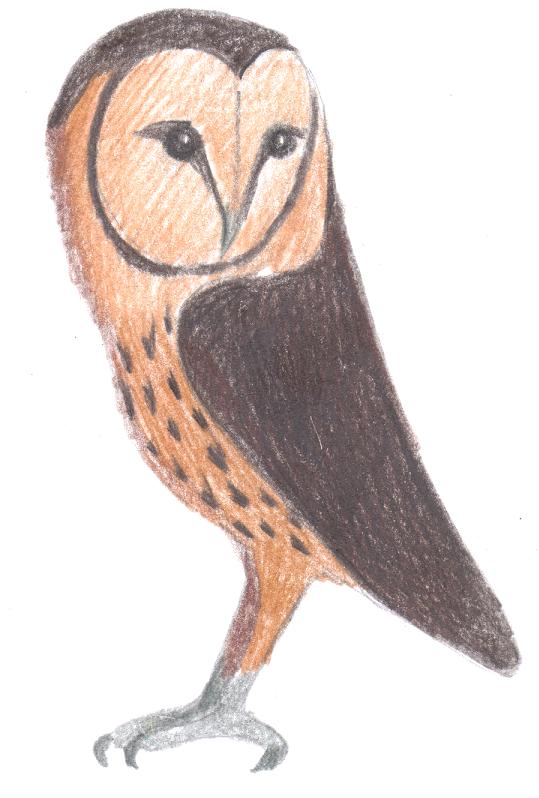
Sula Islands barn owl
Tyto nigrobrunnea Neumann, 1939
Tytonidae; Strigiformes; Aves; Chordata
Colour pencil illustration
February 2010


Tiktaalik roseae Daeschler, Shubin, & Jenkins, 2006
Family and order incertae sedis; Sarcopterygii; Chordata
Colour pencil illustration
February 2010


Cuban solenodon
Solenodon cubanus Peters, 1861
Solenodontidae; Eulipotyphla; Mammalia; Chordata
Colour pencil illustration
February 2010


Brothers Island tuatara
Sphenodon guntheri (Buller, 1877)
Sphenodontidae; Rhynchocephalia; Sauropsida; Chordata
Colour pencil illustration
February 2010

Wednesday, 1 September 2010

PK Comics

Not something I normally blog about, but check out this new web comic, PK Comics, which is just starting out. It was created by a close friend of mine, who has a real talent at this sort of thing. A word about the artistic quality: my friend decided to start uploading the panels as soon as possible in order to get the comic out there. He insists the quality of the artwork will improve in future strips as he takes more time in creating them. The relevance of this comic to me and my interests will become clear in due course...