Tuesday, 18 May 2010

Anuran overload

Here's a selection of photos of frogs and toads (order Anura; class Amphibia; phylum Chordata) from my portfolio. Enjoy!


Pool frog
Pelophylax lessonae (Camerano, 1882) - Ranidae
Slimbridge Wetland Centre, Gloucestershire
September 2009

Once thought to be an invasive species in eastern England, the pool frog was exterminated, before realising it is in fact native, as there are subfossil remains. D'oh! It's back in the wild in the UK now.


Marsh frog
Pelophylax ridibundus (Pallas, 1771) - Ranidae
Crews Hill, Enfield, North London
June 2008

Hybridises with the pool frog to create the edible frog (Pelophylax kl. esculenta), so called because it is the type most often used to create the French delicacy, frog's legs. Or grenouille if you're French.


Levantine frog
Pelophylax bedriagae (Camerano, 1882) - Ranidae
Wild at Geçitköy Reservoir, North Cyprus
April 2009

Very similar to the marsh frog, which doesn't occur in southwestern Asia.


Female common frog
Rana temporaria Linnaeus, 1758 - Ranidae
Wild in Epping Forest, Essex
March 2009

The most common frog species in the wild in Britain and much of western Europe. This is a female in prime breeding condition, and on the lookout for mates.


Albino xenopus frog, or African clawed toad
Xenopus laevis Daudin, 1802 - Pipidae
Aquarium at home
September 2008

I had two albino xenopus frogs for a couple of years, named Elaine and Kitchener - here's one of them (sorry I can't tell from that angle!) with a mouthful of spaghetti... nope, they're chironomid larvae (bloodworms).


Tomato frogs
Dyscophus antongilii Grandidier, 1877 - Microhylidae
Manchester Museum
July 2008

Bright orange frogs from Madagascar.


Argentine horned frog
Ceratophrys ornata Bell, 1843 - Leptodactylidae
Natural History Museum, London
June 2009

This rather obese-looking individual was appropriately named 'Sumo', and was resident in the Natural History Museum's Darwin exhibit and followed by the butterfly exhibit last year. The horned frogs are popular pets, and are often known as Pacman frogs, for obvious reasons.


Giant leaf frog
Phyllomedusa bicolor (Boddaert, 1772) - Hylidae
Jardin des Plantes, Paris
January 2010

This large tree frog exudes a waxy substance which it spreads around its entire body using only its feet. Also called the waxy monkey frog.


Golden poison-dart frogs
Phyllobates terribilis (Myers, Daly, and Malkin, 1978) - Dendrobatidae
Jardin des Plantes, Paris
January 2010

Amongst the most dangerous of all animals. Its poison is reputed to kill from secondary contact through another medium. It is completely harmless in captivity, as it extracts the batrachotoxins from some sort of prey animal, which is as yet unknown. That insect would probably be the most toxic animal of all time.


Skeleton of South American common toad
Rhinella margaritifera (Laurenti, 1768) - Bufonidae
Galeries de Paléontologie et Anatomie comparée, Paris
January 2010

Look at those crests! Closely related to the much-maligned cane toad (R. marina), a native of South America introduced to Australia for pest control, and it has ironically become a pest in its own right.


Rococo toad
Chaunus schneideri Werner, 1894 - Bufonidae
London Zoo
December 2009

This really is one huge mother of a toad.


Panther toad
Amietophrynus pantherinus Smith, 1828 - Bufonidae
Crews Hill
June 2008

A southern African species which turns an amazing leopard-like pattern in the breeding season.


Male common toad
Bufo bufo (Linnaeus, 1758) - Bufonidae
Wild in Epping Forest
March 2009

Male common toads are smaller than females... this and the nuptial pads on the hands (for gripping onto the female during coitus) are the best way to tell apart the sexes. Unless you hold a male and give him a squeeze (Ooh! Matron!) ... if he makes a release call, he's basically telling you to back off and leave him to making babies.


Immature common toad
Wild in Enfield
August 2008

I found this toadlet (newly metamorphosized, but still very tiny, toad) in my garden and decided to keep it for a little while. I successfully fed it on aphids, but it ignored ants. I set it free after a couple of weeks because I was struggling to find any food for it.


Green toad
Pseudepidalea viridis (Laurenti, 1768) - Bufonidae
Crews Hill
June 2008

One of the more common toad species in continental Europe, but absent from Britain. Was formerly included in the genus Bufo, but that huge genus was split into several huge genera and a few smaller ones. The other British toad, the natterjack (Epidalea calamita), got its own genus.

I'll come round to the Caudata (newts and salamanders) next time.

Phoenicopteridae

Who doesn't know flamingos? The combination of long neck, long legs, and pink and red plumage make them amongst the most easily recognized of birds alive today. They make up the family Phoenicopteridae (from the Ancient Greek words for 'crimson wing'... although you could interpret the root word 'phoenix' - Φοῖνιξ - as the mythical bird of the same name), and most taxonomists place this family in its own order, the Phoenicopteriformes. Others include it in the same order as storks, herons, and ibises, the Ciconiiformes, but since that order sometimes includes falcons and other seemingly unrelated fowl, that's no surprise.

There are six (sometimes five... why is taxonomy so confusing?) species in three genera (sometimes one genus!). The genera all share the root 'Phoenico-', but have different suffixes. Modern day flamingos are distributed in southern Europe, much of Africa, southwestern and southern Asia, the West Indies, and Central and South America. South America boasts the most species, whilst only one is found in Europe.


Greater flamingo
Phoenicopterus roseus Pallas, 1811
Phoenicopteridae; Phoenicopteriformes; Aves; Chordata
Colour pencil drawing
May 2010

The greater flamingo is, as its name suggests, the largest of the six extant flamingos. It is distributed across southern Europe and Asia, as well as most of Africa. It is an inhabitant of coastal and interior wetlands, either permanent or temporary, taking advantage of concentrations of water during dry seasons to find their food. Like all flamingos, greater flamingos have a specialised bill with lamellae (flat plates) which act as a filter to separate small aquatic invertebrates and algae from the water, much as baleen whales do.


Greater flamingo
Slimbridge Wetland Centre, Gloucestershire
September 2009

The colour of wild flamingos varies, but there is usually some pink or red present in the plumage of all adults. Greater flamingos have the least red in their plumage, although their wing coverts are a stunning crimson, hence the generic name. The specific name, 'roseus', means 'pink', which describes the effect of red and white feathers in close proximity rather well.


Immature greater flamingo
Slimbridge Wetland Centre, Gloucestershire
September 2009

Young flamingos are born with a grey/brown plumage, not acquiring their distinctive coloration until adulthood. The parents of a flamingo chick will feed their young on a regurgitated fluid, similar in colour and texture to milk, which is produced in the crop (the forepart of the stomach used to hold food before regurgitation). This is not unique to flamingos amongst birds; pigeons are also known to produce 'milk', and who knows, perhaps some non-avian dinosaurs did too?


Caribbean flamingo
Phoenicopterus ruber Linnaeus, 1758
Phoenicopteridae; Phoenicopteriformes; Aves; Chordata
Colour pencil drawing
May 2010

The Caribbean, or American, flamingo, is a very colourful bird. It is not so much pink as hot pink - the specific name, 'ruber', is Latin for 'red'. It is often considered to belong to the same species as the greater flamingo, but this species does not occur in the Old World. It lives on the Galapagos Islands off the coast of Ecuador, many Caribbean islands and the Caribbean coast of Colombia and Venezuela. Its natural occurrence in Florida is debated: it is often considered an iconic bird of that state, although it probably only occurs there as escapees or vagrants from Cuba and other islands.


Caribbean flamingo
Jardin des Plantes, Paris
January 2010

Like the greater flamingo, Caribbean flamingos are pretty much restricted to coastal environments, with a preference for strongly saline waters where their preferred food, the brine shrimp (Artemia - most familiar to lay-people as the sea monkeys you can buy as dried eggs, or to fish-keepers as a common food for tropical fishes).


Chilean flamingo
Phoenicopterus chilensis Molina, 1782
Phoenicopteridae; Phoenicopteriformes; Aves; Chordata
Colour pencil drawing
May 2010

The third and final member of the genus Phoenicopterus is the most southerly distributed of them all. The Chilean flamingo occurs in temperate wetlands of southern South America, right to the tip of the continent. It is about the same size as the Caribbean flamingo, but much more muted in plumage colour. It is more pink, however, than the greater flamingo, and can be differentiated from its congeners by its grey legs with red 'knees'*, and bill, of which the terminal half is black.

* The part of the leg which appears to be the knee is in fact anatomically the ankle: the part which looks like the shin is the foot, while the 'foot' is really just toes. The thigh (femur) is obscured by the bird's feathers. Think of a chicken drumstick, which is the tibia and fibula, the part of the leg above the 'knee'. Sorry if I have completely confused you.


Chilean flamingos
Slimbridge Wetland Centre, Gloucestershire
September 2009

The preferred habitat of the Chilean flamingo is brackish lakes from sea level up to about 4500 m into the Andes Mountains. Chilean flamingos have become established in parts of Europe, as the climate of continental Europe most closely matches that of its native land than any of the other species.


Andean flamingo
Phoenicoparrus andinus Philippi, 1854
Phoenicopteridae; Phoenicopteriformes; Aves; Chordata
Colour pencil drawing
May 2010

The genus Phoenicoparrus ('crimson bird of ill omen') contains two species endemic to the mountains of South America. The larger of the two is the Andean flamingo, found in the alpine plateau known as the puna shared between Peru, Bolivia, Argentina, and Chile. Its pale yellow legs and bill distinguish it from the puna flamingo. The colour of the Andean flamingo's plumage is a rosy pink, which reminds me of raspberry milkshake.


Andean flamingo
Slimbridge Wetland Centre, Gloucestershire
September 2009

The two flamingo species of the genus Phoenicoparrus have narrower bills which are believed to aid in finding smaller food items than the other species. Food must be scarce in the alpine deserts of South America, and being able to filter out the smallest of nutrients from the brine must be advantageous to the Andean and puna flamingos.


Puna flamingo
Phoenicoparrus jamesi Sclater, 1886
Phoenicopteridae; Phoenicopteriformes; Aves; Chordata
Colour pencil drawing
May 2010

The puna, or James's, flamingo is the smallest of the South American flamingos, growing up to less than a metre tall (approximately three feet). It is restricted to the puna grassland of the high Andes, and are often found in mixed groups with the previous two species. In order for this to occur successfully in such a harsh habitat, they must be able to exploit different food sources. Being the smallest of the trio, the puna flamingo has the smallest bill, and thus is able to extract the smallest of diatoms (single-celled plants) from the brine.


Puna flamingo
Slimbridge Wetland Centre, Gloucestershire
September 2009

The puna flamingo has bright red legs and a black-tipped banana-yellow bill with a dark red face. It is amongst the most threatened of the flamingo species due to its remote location and small populations. It was once believed extinct, until a small breeding population was located in the 1950s. It is now considered 'near threatened' by the IUCN, but we all know that doesn't mean it's out of the woods yet.


Lesser flamingo
Phoeniconaias minor Geoffroy Saint-Hilaire, 1798
Phoenicopteridae; Phoenicopteriformes; Aves; Chordata
Colour pencil drawing
May 2010

The lesser flamingo is the sole member of the genus Phoeniconaias ('crimson nymph'), and is found in saline lagoons across east Africa and southern Asia. It is the smallest flamingo, standing at under a metre tall. Flocks of lesser flamingos are reputedly a shocking sight; they are amongst the most numerous of birds in the Rift Valley of Africa, concentrating where the water yields the most planktonic food.


Lesser flamingo amongst other species
Slimbridge Wetland Centre, Gloucestershire
September 2009

Lesser flamingos have somewhat more crimson plumage in the wild than most of the other species, but in captivity, due to a lack of carotenes (red, orange, and yellow pigments in foods which give the birds metabolise to create their own pigment) in their food, are a more muted pink. The eye is yellow, the bill is dark red and black, and the legs are crimson. Lesser flamingos are known to revel in the caustic lakes of the African Rift Valley, such as Lake Natron (so called because of its very high concentrations of sodium salts, including natron itself, which is a carbonate) - these waters support no other life except the prey items and the flamingos themselves. The brine is caustic enough to dissolve human flesh - with this in mind, the flamingo must be one of the most resilient of all birds.

Sunday, 2 May 2010

Invasive Species: Grey Squirrel


Eastern grey squirrel
Sciurus carolinensis Gmelin, 1788
Sciuridae; Rodentia; Mammalia; Chordata
Wild in London Zoo
December 2009

Britain’s native squirrel is the red squirrel (Sciurus vulgaris). It is now only “common” (very much reduced in number) in far flung corners of Great Britain, including the northern portion of Scotland, Cumbria, Merseyside, Anglesey in North Wales, and Norfolk, as well as the Isle of Wight. Elsewhere in the UK and Ireland, the grey squirrel reigns supreme. They are as ubiquitous as rats in urban parks, suburban gardens, and other types of open space.

The eastern grey squirrel was first introduced into the UK in 1876 to a park in Cheshire in the northwest of England. The first Irish grey squirrels appeared in 1911. The spread was rapid, as grey squirrels are less picky in their food sources and habitat requirements, pushing the red squirrels to areas the greys would rather not go.


Eastern grey squirrel
Wild in Oxford Botanic Gardens
July 2008

Grey squirrels are a pest species, and are classed as such. Just like the brown/Norway rat (Rattus norvegicus) and black/ship rat (R. rattus), it is perfectly legal to kill them. In fact, according to the Wildlife and Countryside Act 1981 (God, it’s a long time since I’ve quoted British environmental legislature...), it is illegal to release a trapped grey squirrel. I haven’t kept on top of this legislature, it may have changed in the last five years (it’s been that long since I did UK Nature Conservation at uni? Crikey.). Obviously, humane dispatch is encouraged, as it should be with other animals classed as vermin.

What damage do grey squirrels do anyway? Apart from their direct responsibility for the exile of the red squirrel to tiny pockets of suitable habitat, which are ruthlessly defended by conservationists to prevent grey squirrels from becoming established, they are direct competitors with birds for food at bird tables, and cause damage to saplings and other plants by biting.

Tuesday, 20 April 2010

Invasive Species: Canada Goose


Canada goose
Branta canadensis (Linnaeus, 1758)
Anatidae; Anseriformes; Aves; Chordata
Enfield Town
May 2009

Apart from the mallard (Anas platyrhynchos), the most ubiquitous anseriform (the term used to refer to ducks, geese, swans, and their kin) in British ponds, lakes, rivers, canals, and reservoirs is the Canada goose. The mallard is a native bird, but the Canada goose, as its name suggests, is North American in origin. It is a large bird, close in size to the smaller swan species, and is a vocal one too: gaggles (or skeins if they’re airborne, don’t forget that!) honk loudly.


Canada geese
Verulamium Park, St. Albans, Hertfordshire
July 2009

Canada geese were first introduced to Britain in the late 17th Century to St. James’s Park in London. Today, the park still boasts an impressive array of exotic waterfowl, including pelicans, but back then it was at the wishes of King James II to own flocks and gaggles of birds from other lands. The Canada geese escaped and bred, and they spread to all parts of Great Britain in decades.


Canada goose gosling
Original photograph taken in Enfield Town in June 2006
Popart version created in 2006

I was unfortunate (or fortunate, depending on how you look at it) enough to witness a young coot (Fulica atra) being drowned by a Canada goose. The goose was most likely being protective of its own offspring, a chain of eleven goslings taking up the rear of the two parent birds. If this happens on a regular basis, the geese could be responsible for declines in the population of other birds. I reported my concern to the RSPB (Royal Society for the Protection of Birds) at the time, but they said there was nothing that could be done with relation to culling the goose population, despite them being detrimental to other, native, bird species. It is now legal (since last year) to shoot Canada geese without a license, as well as several other invasive species.


Cackling goose
Branta hutchinsii (Richardson, 1832)
Anatidae; Anseriformes; Aves; Chordata
Slimbridge Wetland Centre, Gloucestershire
September 2009

Occasionally, the odd truly wild Canada goose enters the UK, within groups of migratory geese. Some of these belong to a different species (some consider it just a subspecies), the cackling goose, which is recognised by being smaller and with a white ‘collar’ at the base of the neck. The cackling goose is native to arctic Canada and Alaska, spending the winter further south towards Mexico. The British populations of Canada goose are non-migratory.

Monday, 19 April 2010

Invasive Species: Harlequin Ladybird


Red succinea morph of harlequin ladybird
Harmonia axyridis Pallas, 1773
Coccinellidae; Coleoptera; Insecta; Arthropoda
Hyde Park
October 2007

This is hopefully the first in a series of posts about species of animal and plant that are not native to the British Isles but have become an established part of the flora and fauna, at least in certain specific localities. Harmonia axyridis goes by many names: its most common name in the UK is the harlequin ladybird, because of its black, white, and red or orange coloration which resembles a clown’s make-up. Elsewhere, it is known as the Asian lady beetle, or Japanese ladybug.

A native of eastern Asia, and with close relatives in Australasia, the harlequin ladybird has invaded many other parts of the world, most notably North America and western Europe. It was introduced to North America as a form of biological pest control, but numbers quickly grew out of control. It was first found in the UK as recently as 2004, where it was first found in East Anglia. Since then, the spread has been rapid, reaching Scotland in 2007, and the species is now ubiquitous in the southeast of England. They are often a cause for alarm when large numbers congregate in sheds, outhouses, and even indoors during the autumn into winter, and as they become active once the weather becomes warmer, they make their presence known by flying around and bumping into windows. We have an invasion of harlequins at the Bruce Castle Museum where I work, in at least two of the rooms, one being a toilet.


Harlequin ladybird larva
Enfield, North London
June 2008

The lifecycle of the ladybird consists of four stages: egg, larva, pupa, and imago (adult). There are few people who can’t recognise an adult ladybird (identifying them to species is another story altogether though), but the larvae, looking so different to the adults in shape and coloration, are less well known. The eggs look like small orange balls, and the pupae like a smoothed-over version of a larva, often found stuck to a leaf, where its warning pattern of black and orange is enough to deter would-be predators.


Orange succinea morph of harlequin ladybird
Hyde Park
October 2007

There are three recognised colour morphs of the harlequin ladybird in the UK. The above photo is of the succinea morph, which has a red or orange background and many black spots. The spectabilis morph has four red spots on a black background, and the conspicua morph has two large red spots on a black background, Other morphs are present in the native and North American populations, but these are the only ones present so far in Britain.


Mating red succinea morph harlequin ladybirds
Enfield
June 2008

The advice I was given a few years ago as to what to do if I found a harlequin ladybird (then quite a rare occurrence, I didn’t see my first one until 2006, I think) was to humanely despatch it. Usually that involves the heel of a shoe. I’m now seeing so many, and they are breeding so rapidly, that it’s proving impossible to do such a thing to all of them. Squashing a few ladybirds in the centre of the area they have spread from is hardly going to be effective.

Wednesday, 14 April 2010

New Pop Art


Turquoise-browed Motmot
Eumomota superciliosa (Sandbach, 1837)
Momotidae; Coraciiformes; Aves; Chordata
Original photograph of stuffed specimen taken at Natural History Museum, London, March 2008
Popart version created in April 2010


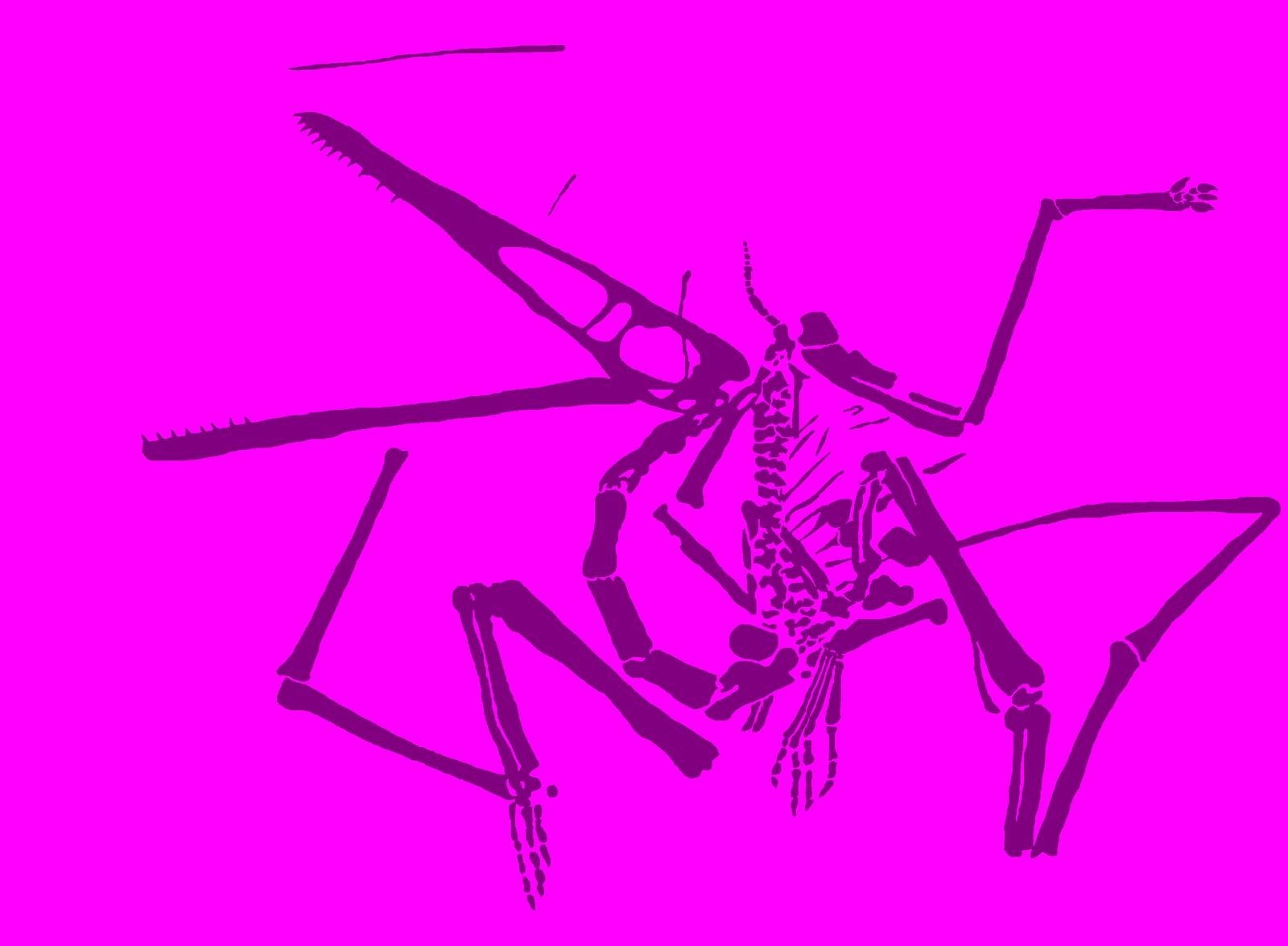
Pterodactylus antiquus


Pterodactylus antiquus in black and white


Pterodactylus antiquus in acid green and black

Pterodactylus antiquus (von Sömmerring, 1812)
Pterodactylidae; Pterosauria; Sauropsida; Chordata
Original photograph of specimen cast taken at Cambridge Zoology Museum, May 2008
Popart versions created in April 2010

I felt inspired to create some more pop art. The Pterodactylus took me about 7 hours in all... recolouring them only takes a couple of minutes. Anyone got any ideas for other colour combinations that would look cool?

I might give a tutorial one day on ART Evolved, if anyone's interested in seeing how I do this using only primitive Windows technology ... does that sound like a good idea?

Thursday, 8 April 2010

More Pop Art


Spectacled Owl
Pulsatrix perspicillata (Latham, 1790)
Strigidae; Strigiformes; Aves; Chordata
Original photo taken at London Zoo, August 2004
Popart version created in 2006


Marbled Teal in purple
Marmaronetta angustirostris (Ménétries, 1832)
Anatidae; Anseriformes; Aves; Chordata
Original photo taken at London Wetland Centre, January 2006
Popart version created in 2006


Male Common Goldeneye
Bucephala clangula (Linnaeus, 1758)
Anatidae; Anseriformes; Aves; Chordata
Original photo taken at London Wetland Centre, January 2007
Popart version created in 2008


Magpie Goose
Anseranas semipalmata Latham, 1798
Anseranatidae; Anseriformes; Aves; Chordata
Original photo taken at London Wetland Centre, January 2008
Popart version created in 2008


King Penguin
Aptenodytes patagonicus (Miller, 1778)
Spheniscidae; Sphenisciformes; Aves; Chordata
Original photo taken at Edinburgh Zoo, June 2005
Popart version created in 2006

More to follow; I'm glad people like these.

Wednesday, 7 April 2010

Pop Art


Lilac-breasted Roller
Coracias caudatus Linnaeus, 1766
Coraciidae; Coraciiformes; Aves; Chordata
Original photo taken at London Zoo, August 2004
Popart version created in 2006


Himalayan Monal
Lophophorus impejanus (Latham, 1790)
Phasianidae; Galliformes; Aves; Chordata
Original photo taken at Edinburgh Zoo, June 2005
Popart version created in 2006


Herring Gull
Larus argentatus Pontoppidan, 1763
Laridae; Charadriiformes; Aves; Chordata
Original photo taken in Falmouth, Cornwall, July 2006
Popart version created in 2006


Burchell's Zebra
Equus burchellii Gray, 1824
Equidae; Perissodactyla; Mammalia; Chordata
Original photograph taken at Paradise Wildlife Park, Broxbourne, Hertfordshire, August 2005
Popart version created in 2006


Black-necked Aracari
Pteroglossus aracari (Linnaeus, 1758)
Ramphastidae; Piciformes; Aves; Chordata
Original photo taken at Newquay Zoo, Cornwall, July 2006
Popart version created in 2006

A series of popart-style illustrations for you, created some years ago. I used to really enjoy creating these, using nothing more than a digital photograph and MS Paint, and plenty of patience. If these are popular, I'll post some more.